After a robust 2025, Australia’s housing market is transitioning to a more measured pace of growth.National home values rose 8.6% over the year, with all capital cities and regional areas recording gains.
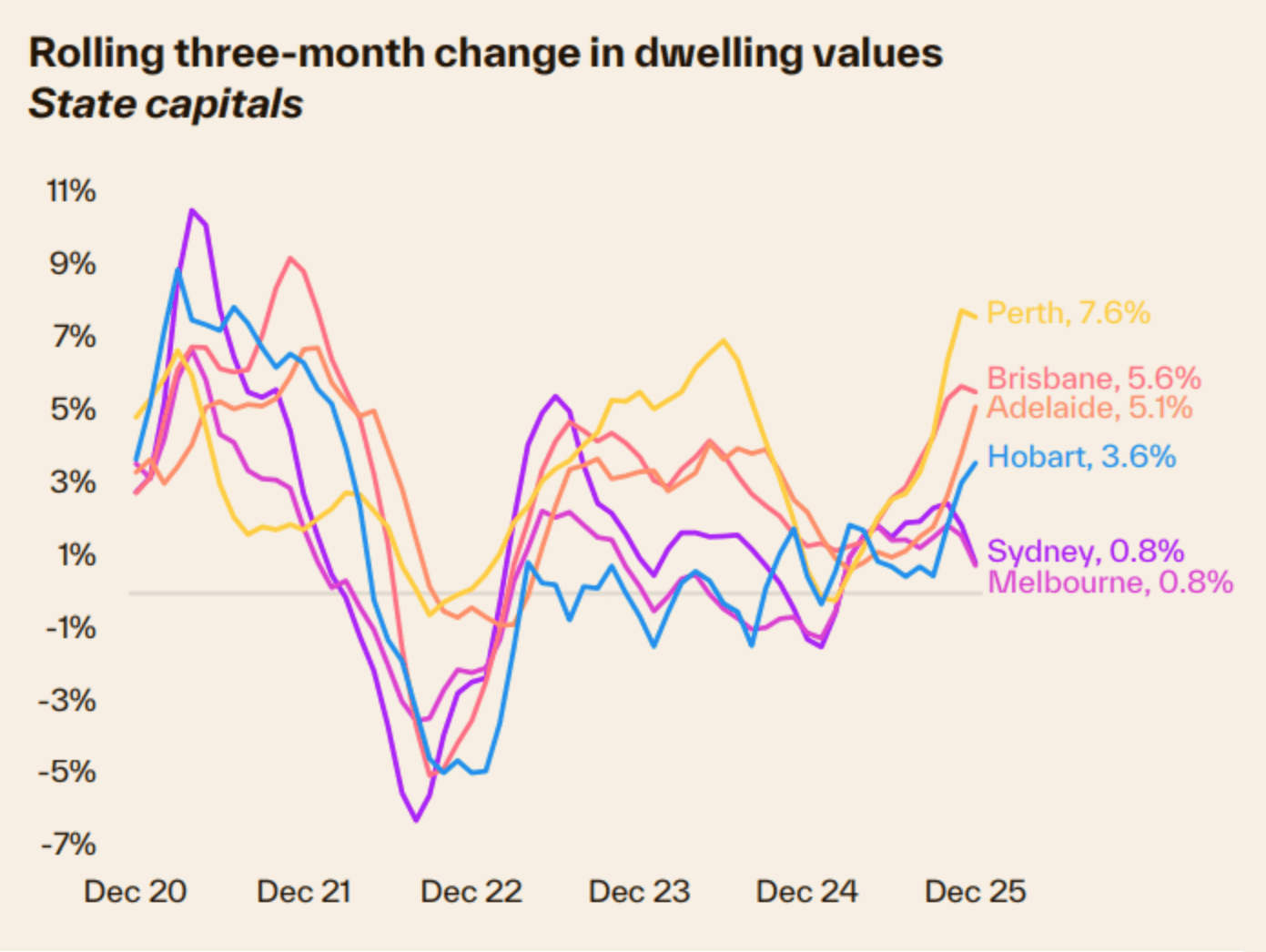
But in December, growth slowed to just 0.7%, with Sydney and Melbourne slipping into negative territory. With affordability pressures rising and interest rate expectations shifting, the outlook for 2026 is more disciplined – though undersupply and focused demand continue to support values in key affordable and high yielding markets like Perth, Darwin and regional Queensland.
Key Take Aways
Momentum slowing
December saw momentum ease in Sydney and Melbourne, with growth cooling more broadly – a sign the market is becoming more selective rather than overheated.
Affordability stretched
Housing costs are biting harder. It now takes 11 years to save a deposit, and renters are spending a record 33.4% of their income.
Regional strength continues
Regional markets outpaced capitals in 2025. Western Australia and Queensland are top performers among regional areas.
Investors shift focus
Demand is concentrating in affordable, higher-yield markets like Perth and regional Queensland as serviceability rules tighten.
Supply remains tight
There’s little sign of a material increase in listings or new builds, a key factor helping to stabilise prices into 2026.
Outlook: selective, with upside
While headline growth across many so‑called “hot” markets is expected to be modest in 2026, structural undersupply and pockets of targeted demand continue to support positive momentum. With the right data‑led research, there remains meaningful scope for outperformance.
City momentum stalls, but smaller markets shine
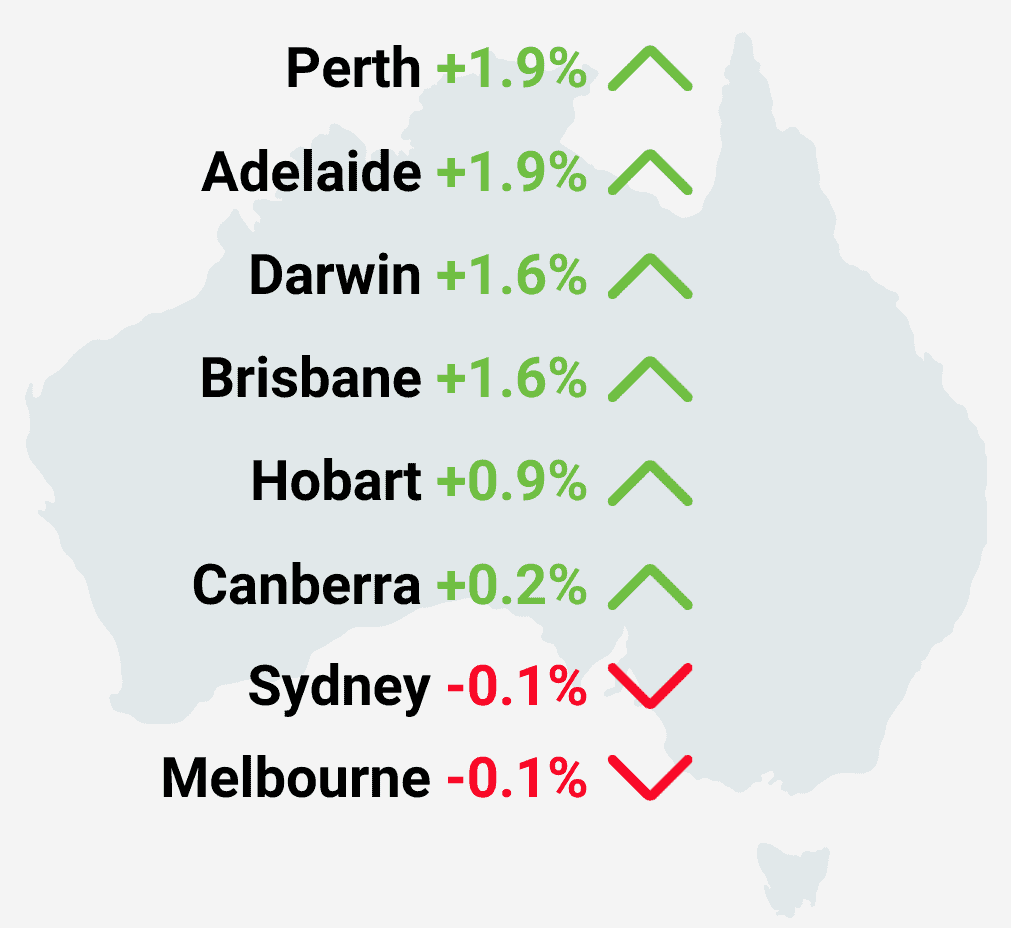
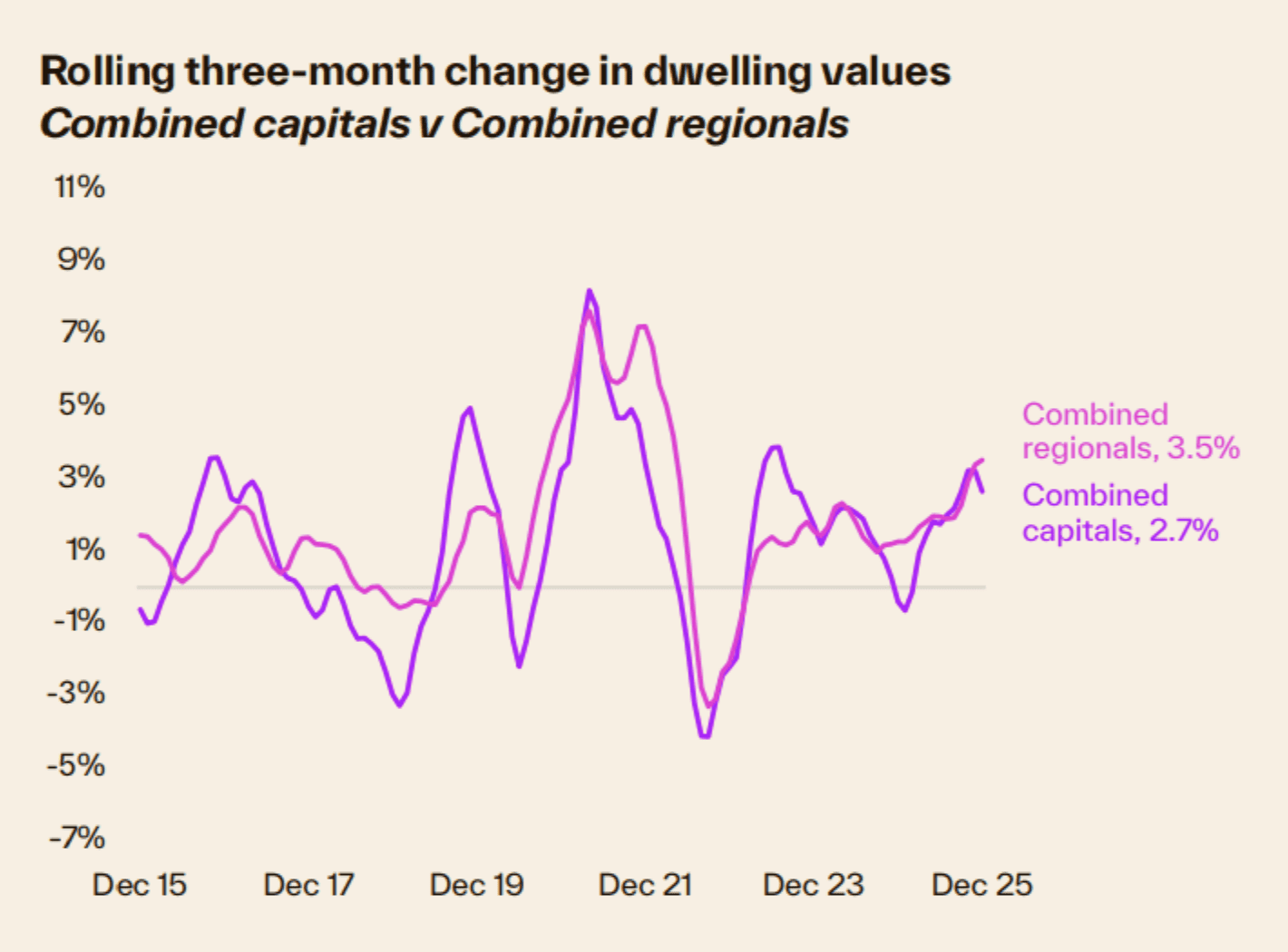
Sydney and Melbourne both saw a -0.1% drop in December, marking their first decline in almost a year. But elsewhere, momentum remained strong. Perth and Adelaide recorded 1.9% monthly gains, while Brisbane and Darwin rose 1.6%. Across 2025, Darwin was the standout performer, with values up 18.9%. Regional markets outperformed capitals for the year, up 9.7% versus 8.2%, with regional WA leading the charge. While growth is softening, there’s still life in the market, especially in value-driven locations where affordability is less of a constraint.
Affordability hits hard
Affordability has become a key drag on momentum. With a national value-to-income ratio of 8.2, it now takes 11 years for the average household to save a 20% deposit. Renters are spending 33.4% of their income on housing. While these pressures are easing demand in higher-priced markets, they’re continuing to support growth at the affordable end.
Rents keep rising, but yields fall
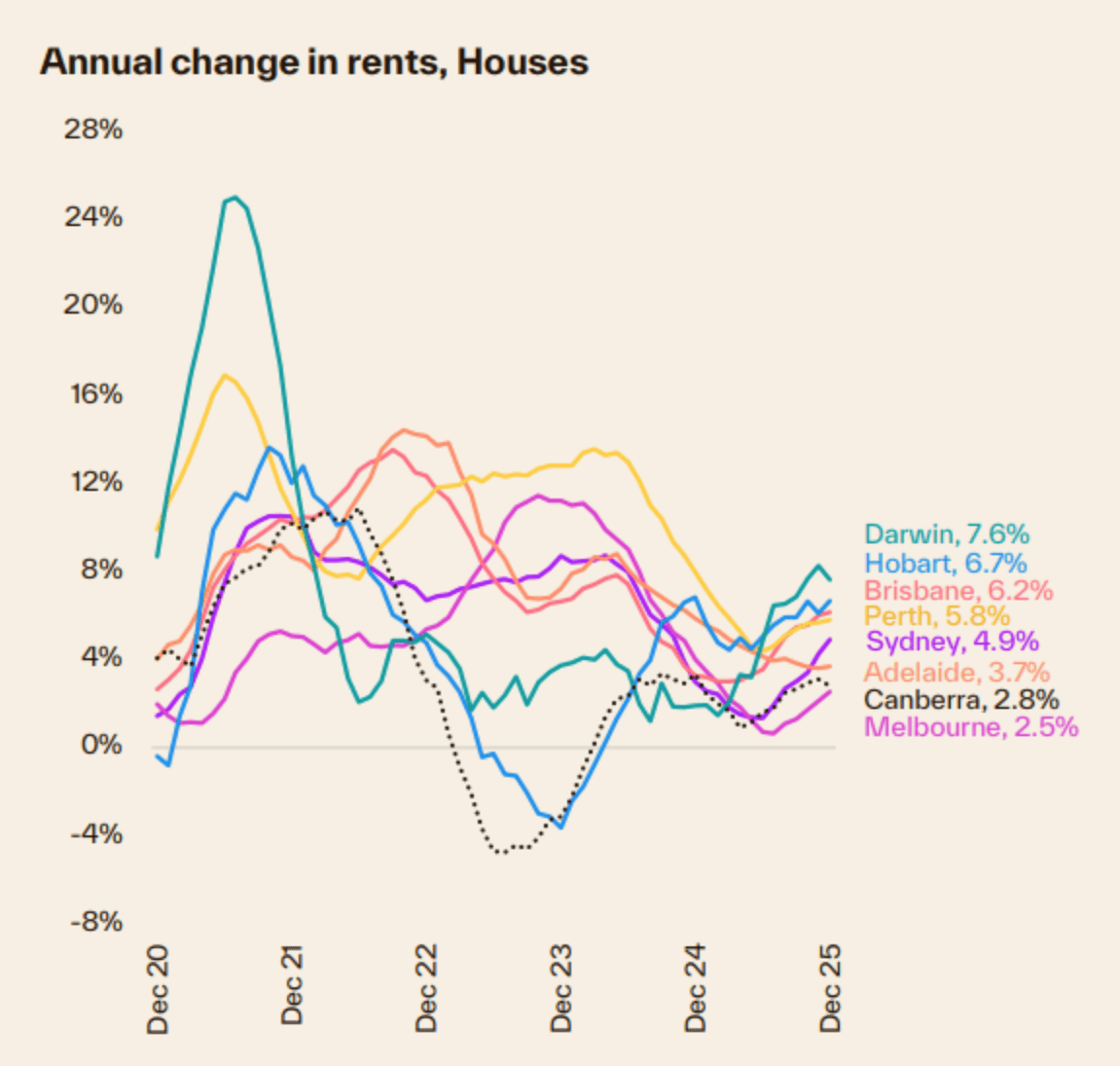
National rents rose 5.2% in 2025, up from 4.8% the year prior, but still well down on 2021–2023 levels. Darwin saw the strongest rent growth (+8.2%), while Melbourne recorded the weakest (+2.9%). Despite rising rents, prices rose faster, pushing gross rental yields down to 3.56%, their lowest since 2022.